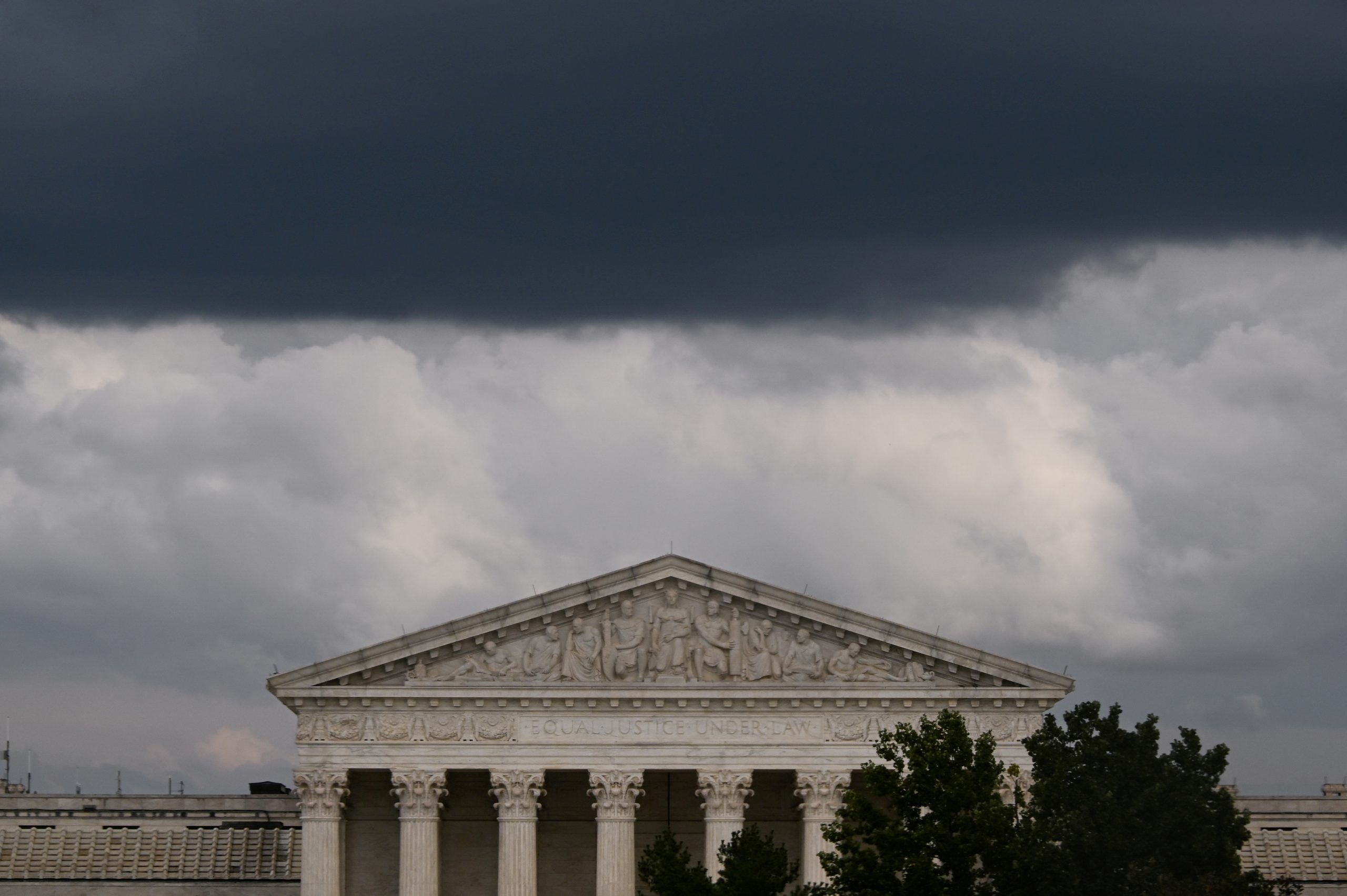




The U.S. Supreme Court returned to work on Monday for the first time since liberal Justice Ruth Bader Ginsburg’s death, opening its new term as Senate Republicans pursued quick confirmation of President Donald Trump’s conservative nominee to replace her.
With eight justices rather than the usual nine, the court was hearing arguments in two cases on Monday, starting a term due to run through next June that includes several major cases including one that will decide the fate of the Obamacare healthcare law. Its last term ended in July.
At least at the outset of the term, the cases are being argued as they were at the end of the last term by teleconference because of the coronavirus pandemic.
Before the first argument began, Chief Justice John Roberts paid tribute to Ginsburg, calling her a “dear friend and treasured colleague” and sent “our condolences to her children, extended family and countless admirers.” Roberts said that a memorial service will at some point be held in the courtroom.
Ginsburg died on Sept. 18 at age 87. Trump on Sept. 26 nominated federal appeals court judge Amy Coney Barrett to replace her, and asked the Republican-led Senate to confirm her by the Nov. 3 U.S. election. If confirmed, Barrett would give the court a 6-3 conservative majority.
Senate Majority Leader Mitch McConnell reiterated on Saturday that Barrett’s confirmation hearings, due to be held next week, will proceed as planned even though two Republicans on the Judiciary Committee had contracted the coronavirus. Trump himself remained hospitalized with COVID-19 on Monday.
Trump has said he wants Barrett to be confirmed before Election Day so she could cast a decisive vote in any election-related dispute, potentially in his favor. He has said he expects the Supreme Court to decide the outcome of the election, though it has done so only once – the disputed 2000 contest ultimately awarded to Republican George W. Bush.
The justices began hearing arguments in the new term’s first case, which centered on a system used by the state of Delaware that requires some of its courts to be ideologically balanced. The justices were hearing the state’s appeal defending its law, which requires that no more than half of the judges on certain benches can be affiliated with one political party.
The second case was a dispute between Texas and New Mexico over rights to the waters of the Pecos River that runs through both states.
On Wednesday, the justices weigh a multibillion-dollar software copyright dispute between Alphabet Inc’s Google and Oracle Corp. The case involves Oracle’s accusation that Google infringed its software copyrights to build the Android operating system used in smartphones.
Two big cases are scheduled for November.
On Nov. 10, a week after Election Day, the court is due to hear arguments in a case in which a group of Democratic-led states including California and New York are striving to preserve the 2010 Affordable Care Act, better known as Obamacare. Republican-led states and Trump’s administration are waging a court battle to strike down Obamacare.
Obamacare has helped roughly 20 million Americans obtain medical insurance either through government programs or through policies from private insurers made available in Obamacare marketplaces. It also bars insurers from refusing to cover people with pre-existing medical conditions. Republican opponents have called the law an unwarranted intervention by government in health insurance markets.
The Supreme Court previously upheld it 5-4 in a 2012 ruling in which conservative Chief Justice Roberts cast the crucial vote. It rejected another challenge 6-3 in 2015. Ginsburg was in the majority both times. Barrett has criticized both rulings.
The court hears another major case on Nov. 4 concerning the scope of religious-rights exemptions to certain federal laws. The dispute arose from Philadelphia’s decision to bar a local Roman Catholic entity from participating in the Democratic-governed city’s foster-care program because the organization prohibits same-sex couples from serving as foster parents.
(Reporting by Lawrence Hurley; Editing by Will Dunham)