

• Latest
  • Trending
  • All
  • News
  • Business
  • Lifestyle
Coronavirus Patients Most Infectious When They First Feel Unwell: WHO

Coronavirus Patients Most Infectious When They First Feel Unwell: WHO

June 10, 2020

Tulsi Gabbard: Trump’s decision to act against Iran was prompted by perceived imminent threat – learn more!

March 18, 2026

Conservative group heads to Capitol Hill with parents’ rights campaign, set to meet with Mike Johnson

March 18, 2026

Republicans show determination as Senate debate begins on SAVE Act, no signs of backing down.

March 18, 2026

Republicans stand firm on SAVE Act as Senate debate begins, showing no signs of backing down

March 18, 2026

Mullin faces tough questions from Democrats in bid to lead DHS during shutdown showdown.

March 18, 2026

Tuberville stands by comparison between Mamdani and 9/11: ‘I base my views on his words’

March 18, 2026

Tuberville stands by post equating Mamdani with 9/11 attacks: ‘His words speak for themselves’.

March 18, 2026

Democratic candidate Bobby Pulido sparks controversy with risqué music video for latest song.

March 18, 2026

Dem congressional candidate Bobby Pulido’s provocative music video sparks debate.

March 18, 2026

Dem congressional hopeful Bobby Pulido criticized for provocative music video for his latest song.

March 18, 2026

Democratic candidate Bobby Pulido stirs up controversy with risqué music video for latest song.

March 17, 2026

Ex-Congresswoman secures primary win to reclaim suburban Chicago seat.

March 17, 2026
  • Trending Topics:    
  • 2024 Election
  • Joe Biden
  • Donald Trump
  • Congress
  • Faith
  • Sports
  • Immigration
Wednesday, March 18, 2026
IJR
  • Politics
  • US News
  • Commentary
  • World News
  • Faith
  • Latest Headlines
No Result
View All Result
IJR
No Result
View All Result
Home News

Coronavirus Patients Most Infectious When They First Feel Unwell: WHO

by Reuters
June 10, 2020 at 7:26 am
in News
247 5
0
Coronavirus Patients Most Infectious When They First Feel Unwell: WHO

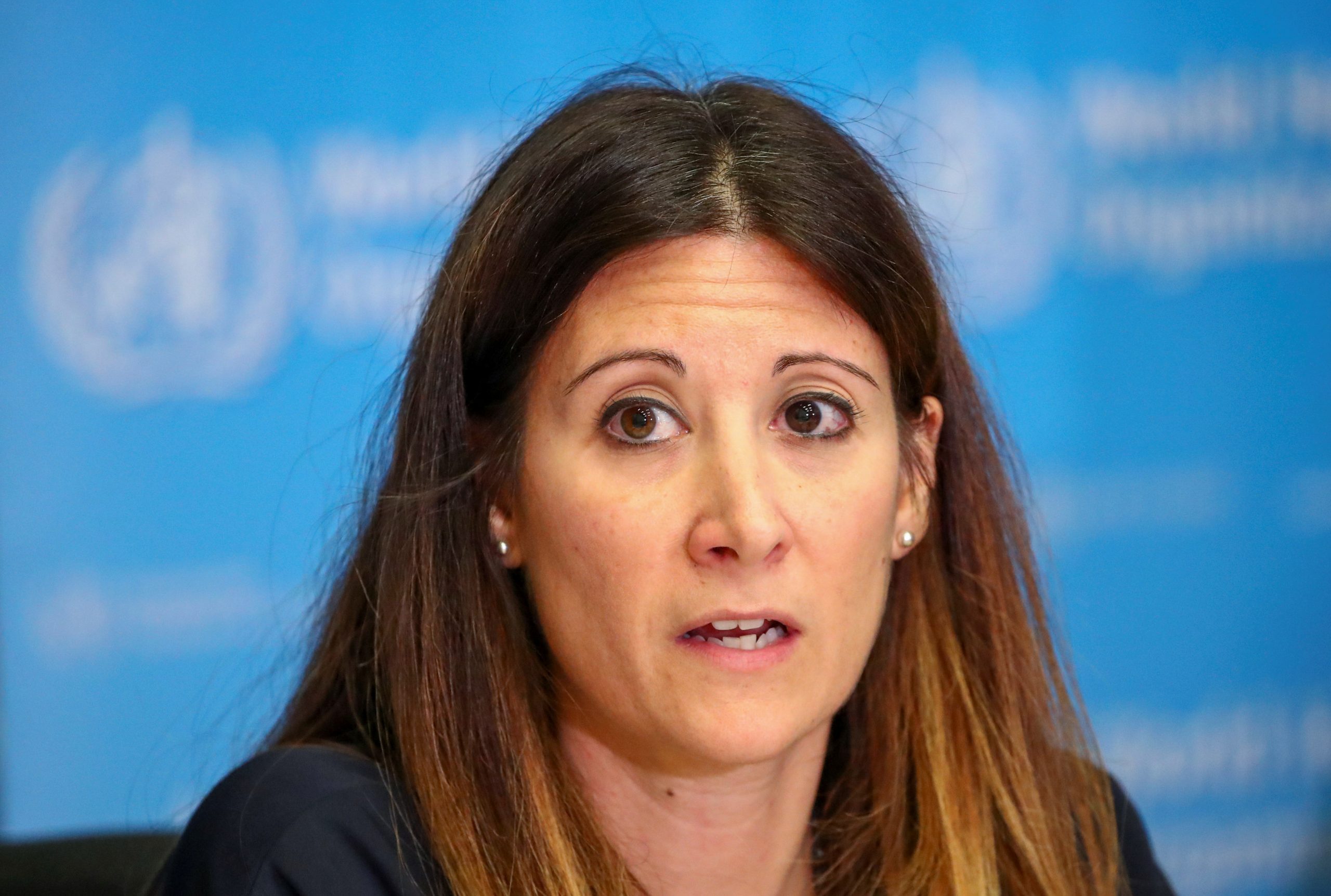
Denis Balibouse/Reuters

491
SHARES
1.4k
VIEWS
Share on FacebookShare on Twitter

Studies show people with the coronavirus are most infectious just at the point when they first begin to feel unwell, World Health Organization (WHO) experts said on Tuesday.

This feature has made it so hard to control spread of the virus that causes COVID-19 disease, but it can be done through rigorous testing and social distancing, they said.

“It appears from very limited information we have right now that people have more virus in their body at or around the time that they develop symptoms, so very early on,” Maria van Kerkhove, a WHO epidemiologist and technical lead on the pandemic, told a live session on social media.

Preliminary studies from Germany and the United States suggest that people with mild symptoms can be infectious for up to 8-9 days, and “it can be a lot longer for people who are more severely ill”, she said.

Earlier, some disease experts questioned her statement on Monday that transmission of COVID-19 by people with no symptoms is “very rare”, saying this guidance could pose problems for governments as they seek to lift lockdowns.

Van Kerkhove, citing disease-modelling studies, clarified on Tuesday that some people do not develop symptoms, but can still infect others.

“Some estimates of around 40 percent of transmission may be due to asymptomatic (cases), but those are from models. So I didn’t include that in my answer yesterday but wanted to make sure that I made that clear,” she said.

Dr. Mike Ryan, WHO’s top emergencies expert, said that the novel coronavirus lodges in the upper respiratory tract, making it easier to transmit by droplets than related viruses such as SARS or MERS, which are in the lower tract.

“Now as we look at COVID-19, we have an infectious pathogen that is present in the upper airway for which the viral loads are peaking at the time you are just beginning to get sick,” he said.

“That means you could be in the restaurant feeling perfectly well and start to get a fever, you are feeling ok, you didn’t think to stay home, but that’s the moment at which your viral load could be actually quite high,” he said.

Ryan added: “And it’s because the disease can spread at that moment that the disease is so contagious, that’s why it spread around the world in such an uncontained way, is because it’s hard to stop this virus.”

But some countries have shown that transmission can be brought down to “an acceptable level or even to no level”, as New Zealand had recently demonstrated, he said.

(additional reporting by Josephine Mason; writing by Nick Macfie and Stephanie Nebehay; Editing by Kevin Liffey and Giles Elgood)


Tags: Coronavirus OutbreakWorld Health Organization
Share196Tweet123
Reuters

Reuters

Reuters is an international news organization.

Join Over 6M Subscribers

We’re organizing an online community to elevate trusted voices on all sides so that you can be fully informed.


IJR

    Copyright © 2024 IJR

Trusted Voices On All Sides

  • About Us
  • GDPR Privacy Policy
  • Terms of Service
  • Editorial Standards & Corrections Policy
  • Subscribe to IJR

Follow Us

No Result
View All Result
  • Politics
  • US News
  • Commentary
  • World News
  • Faith
  • Latest Headlines

    Copyright © 2024 IJR

Welcome Back!

Login to your account below

Forgotten Password?

Retrieve your password

Please enter your username or email address to reset your password.

Log In

Thanks for reading IJR

Create your free account or log in to continue reading

Please enter a valid email
Forgot password?

By providing your information, you are entitled to Independent Journal Review`s email news updates free of charge. You also agree to our Privacy Policy and newsletter email usage